


With Artemis back in the news this week, one detail stood out to me: when something important breaks, email is not the solution for jobsite communication.
Roughly seven hours into the mission, NASA’s crew reportedly ran into an Outlook email issue and had to call Houston for help. Which, in its own way, is a pretty good reminder for the rest of us: when the work is mission-critical, communication has to be immediate, direct and useful.
They talk. They troubleshoot. They solve the problem in real time.
For building product brands, jobsite communication is one of the most underused competitive advantages in the channel.
Picture this. A trade foreman is waiting on an answer.
Not because the question is particularly challenging. No, it’s simply because the person who knows the answer – sent an email this morning – and hasn’t followed up since.
Meanwhile, work has stopped in the field. The crew is on the clock. And somewhere in an inbox… the resolution to a two-minute conversation, is waiting to be opened.
That scenario plays out on jobsites every day. And it squanders more than just time.
It costs trust.
The Inbox Feels Like Progress… It Often Isn’t
Email is certainly a comfort tool. It creates documentation. It copies the right people. It gives everyone the reassurance that something has been handled.
But handled – and resolved – are not the same.
On a jobsite, waiting is waste. It is not a pause in the process. It is the process breaking down. And when the primary response to a field problem is an email chain, the breakdown gets longer with every reply.
This is not merely a contractor’s problem. It is a building product brand’s opportunity.
Because the field is where brands either earn loyalty… or lose it. And far too many sales and marketing teams are making decisions about messaging, training, packaging and product performance… without ever standing where that work actually happens.
The Field Has a Different Version of the Truth
The version of a narrative that reaches a marketing team is almost never the reality which exists on the jobsite.
It has been filtered. Summarized or softened. And all too often, delayed.
A “call report” documents what a rep remembers – when diligence inspired them to post it – hours after the conversation. A “dealer survey” recites what people were willing to say in a structured format. And a “distributor debrief” discloses what someone felt comfortable escalating.
None of those tell you what the jobsite foreman is growling under-their-breath.
The causes of installation slowdown. What instructions are being ignored – because they don’t match how the product behaves – in the field. Which shortcuts and workarounds have quietly become standard practice.
What innovative new feature a Building Product Brand invested months developing… that nobody on the crew actually uses.
That intelligence is poised conveniently on a jobsite right now. Simply waiting for someone to show up and ask.
Stepping Up Before the Problem Does
Most jobsite visits happen under less than ideal conditions.
There is already a complaint. A delay. A failure. And when a brand team arrives in that environment, teams are defensive. The feedback is shaped by pressure. The conversation is squandered on damage control… rather than an opportunity for discovery.
The smarter approach is to be on the field before anything goes wrong.
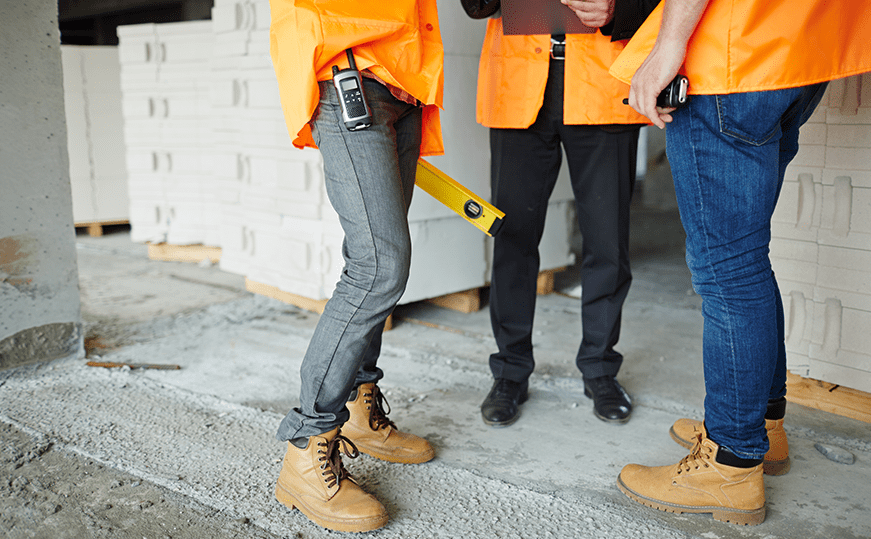
Walk the site. Watch how the product is staged, opened, read, cut and installed. Notice what is posted on the wall – and which instructions – are conspicuously absent. Pay attention to what the crew is accomplishing naturally, without even thinking. Because that unconscious behavior is often the most honest data point… a brand can harvest.
What are they doing that we didn’t anticipate?
What are they not doing that we assumed they would?
Those observations don’t come from dashboards or reports. They come from being present.
This kind of structured, intentional field observation – going to the actual place where the work gets done – is one of the most underused research tools available to Building Product Brands.
Some have named this a Gemba Walk. We simply call it… doing the work required to know the customer.
What This Means for Sales and Marketing Alignment
Here is where the communication challenge becomes a growth problem.
When sales are hearing one version of reality – and marketing teams are creating campaigns from an entirely different set of assumptions – brand promises drift.
Messaging becomes less useful. Training migrates from being relevant. And product benefits begin disconnecting from the people expected to believe them.
We have seen this pattern more times than we can count.
A brand invests in a campaign… built around a specific product solution. The benefit is real. But it is not the feature an installer cares about. Because no one on the marketing team even asked an installer. In a setting where the contractor felt comfortable enough… to provide the unvarnished truth.
That gap can be closed. But it only arrives through intimate conversation.
A walk with a superintendent. A series of open-ended questions with crew leads. Ride-alongs with a rep who has been on a dozen installs this month. Those interactions surface the kind of context that turns a clever campaign… into a credible program.
From a fully aligned sales and marketing team that has experienced the same reality. And is confidently executing from it.
Brands That Do This Already Know Something Others Don’t
When you’re in this industry long enough to recognize the brands that are winning channel conversations… it’s easy to spot the ones that are guessing at them.
The difference is rarely budget. It is almost always proximity.
The brands that go to the field regularly – that build jobsite visits into their process rather than treating them as crisis responses – land with sharper messaging.
More credible training. Better product feedback loops. And sales teams who know the stories they are reciting in golf outings… actually match what is happening on the jobsite.
The actionable insights are not about scale or spend. Rather, they are a result of precision. Knowing the right people. Having the right conversations. And ensuring the intelligence flowing into an organization is honest. Instead of edited.
Talk First… Document After
Construction runs on paperwork. So do brands. There is real value in a clear paper trail.
But the best teams in this channel have learned an important distinction: email should memorialize a decision. Rather than a substitute for the conversation required to make one.
When something is urgent – visit the site and make the call – walk down the hall.
Then send the note.
When something is unclear… ask the question live. Then document what was agreed.
That shift sounds small. The results are not.
Reliable decisions. More honest feedback. And a brand team that is marketing from reality… instead of from a conference room.
One Last Thing
If your team is making decisions without direct jobsite insight… you’re operating with incomplete data.
Let’s fix that.
We help building product brands discover mission-critical opportunities in the field.
And turn those into sharper positioning. Stronger messaging. And better sales alignment.
If that’s a gap is worth closing… perhaps we should start with a simple conversation to uncover where that gap really is: sk@kleberandassociates.com.