

Tool marketing has never lacked confidence.
Tougher. Stronger. Faster. More powerful. More durable.
The category has spent decades finding new ways to tell professionals – that one tool will help them do the job better – than another.
STANLEY’s new campaign takes a somewhat different approach.
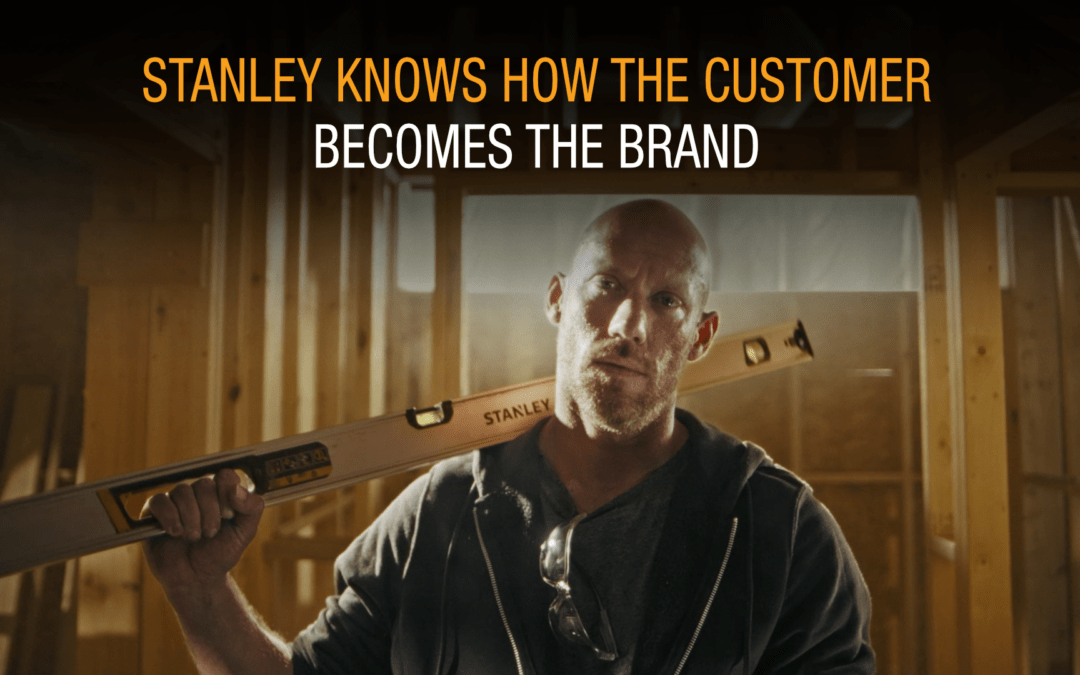
Instead of putting product performance at the center of the story… the campaign starts with the people using the products. Specifically, residential professionals who take pride in their work.
Who know what they’re doing and have little patience for anything that gets in the way.
That includes marketing.
At the center of the campaign is Stan… a talking toolbox, who calls out marketing hype, unnecessary features and other “jobsite nonsense.” The humor gives the campaign personality.
Yet the idea underneath it is what’s particularly interesting.
STANLEY isn’t simply telling contractors what its products do. It’s telling them, “We see the world the way you do.”
Selling an Attitude Instead of an Attribute
That distinction matters in a mature category. Durability and reliability are important. But they are difficult territories for any established tool brand to own. Competitors can make similar claims… often with equally convincing product evidence.
“ALL BUILD. NO BULL.” moves the conversation entirely somewhere else. It takes familiar product attributes like simplicity, practicality – yes, dependability too – and connects them to the identity of the customer. STANLEY’s tools are straightforward because the people who use them are straightforward.
They are built to work. Because professionals have work, to get done.
The customer becomes the hero. While STANLEY takes on the role of an ally… that shares the same standards.
That makes the positioning feel less like a product claim. And more like a worldview. Most importantly, it gives the brand something increasingly difficult to find in building products marketing:
A distinct personality.
Could another tool company talk about getting the job done? Of course. Could another brand adopt “ALL BUILD. NO BULL.” and make it feel equally natural? That would be considerably harder.
When Heritage Supports the Story
The positioning benefits from a legacy many brand promises lack… history that supports the idea.
STANLEY traces its practical, “work-first” equity back to its founding in 1843. And a belief in making tools shaped by the work – and workers – themselves.
Products like the No. 99 Utility Knife. And the company’s early steel tape measures reinforce that heritage.
Which gives the campaign credibility… beyond its creative execution.
“ALL BUILD. NO BULL.” does not have to represent a reinvention of STANLEY. Instead, it can be interpreted as a sharper expression of something that was already foundational.
Which is often exactly where the strongest brand positionings come from. The goal is not to invent a new story. It is to identify an existing truth – that audiences recognize – and make it that much more meaningful.
The Risk of Calling Out Bull
Of course, strong positioning comes with consequences.
By taking aim at marketing hype – unnecessary features, overcomplication and category nonsense – STANLEY has established a standard not only for its competitors.
But for itself.
The brand cannot criticize meaningless innovation while introducing products filled with features audiences do not need. It cannot mock exaggerated marketing language. And then use that type of narrative in its own communications.
Most importantly, the brand cannot claim to understand the realities of small contractors – if its products, service or retail experience – make their jobs more difficult.
So, STANLEY has given customers permission to judge everything the company does against a very simple question:
Is this useful, or is it bull?
Sure, this creates risk. But it is also what makes the positioning so potentially powerful.
There are early signs the company intends to back it up. Parent Stanley Black & Decker committed $1 billion through 2028 to U.S. manufacturing and R&D, on top of an existing $60 million pledge to skilled trades training. That is investment aimed at the work itself, not the message.
Strong brands do more than influence advertising. They create a filter for decisions across product development, packaging, sales and customer experience.
If (shall we consider, when) this campaign truly becomes that kind of filter – the mission could have value – while at the same creating unifying culture.
Well beyond the ads themselves.
More Than a Campaign
Stan, the wise-cracking, talking toolbox, truly can become a memorable character. That gives the brand a recognizable voice. But caution must be exercised in this type of pursuit. As humor could eventually overwhelm the stronger strategic idea underneath it.
That will depend, of course, on how the campaign evolves. But the underlying positioning is promising.
Because it starts with a recognizable customer truth.
Rather than an expected product claim.
Professional contractors do not need manufacturers to tell them how hard they work. Or how demanding their jobs can be.
They need brands that understand those realities. And consistently make it easier for them… to do good work.
STANLEY appears to be positioning itself squarely on that side of the relationship.
And unlike many campaigns built around broad ideas like confidence, performance or innovation… “ALL BUILD. NO BULL.” gives the brand a clear point of view about what belongs.
And what doesn’t.
Now comes the harder part. If you’re going to build a brand around calling out bull – you’d better, make sure you’re not creating any – of your own.